 3 hours ago
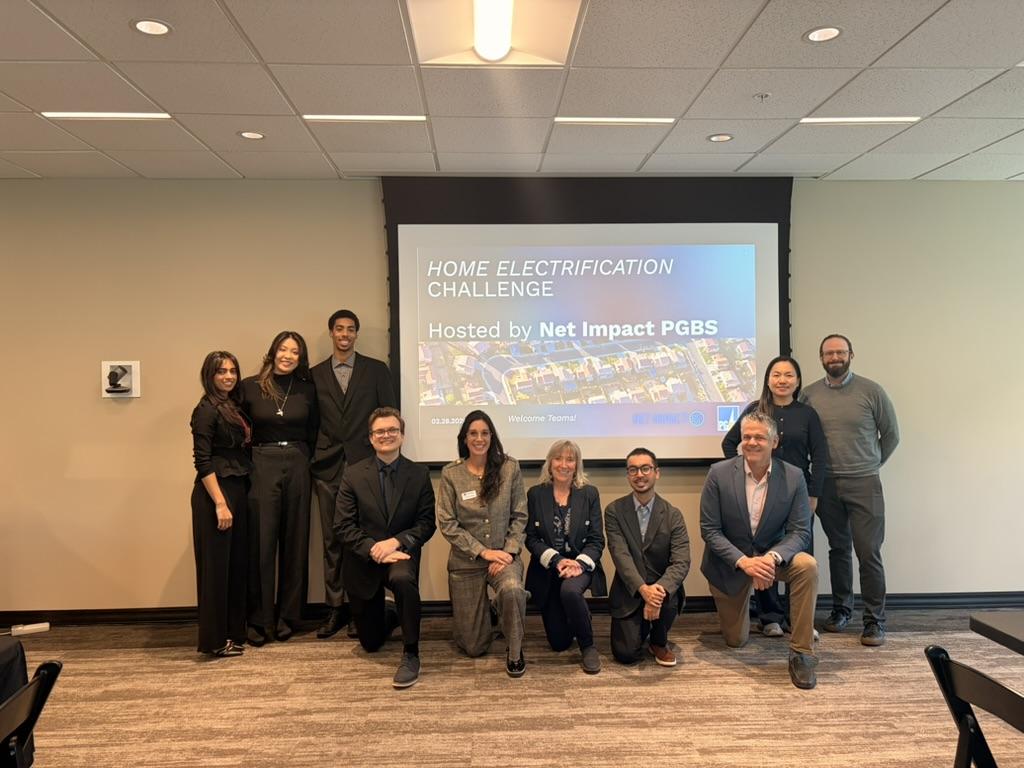
Members of the Graziadio Business School’s Net Impact chapter, in partnership with PG&E, host the Home Electrification Challenge at the Pepperdine Calabasas campus Feb. 20. Students developed strategies to help homeowners transition to cleaner energy and fight climate change while competing for prizes and mentorship from PG&E’s sustainability team. Photo courtesy of Lauren Loo
Can profit and purpose coexist? At Pepperdine’s Graziadio Business School, the SEER certificate is built on the belief they must.
The SEER Program is a certificate-level initiative focused on integrating Social, Environmental, and Ethical Responsibility into business strategy. The program is not designed as a concentration on environmental sustainability within business, but as training for future leaders committed to creating a better world, said Robert Bikel, Graziadio Business School professor and director of SEER.
“You’re right up against that tension between human activity and a fragile environment,” Bikel said. “Managing competing objectives when they pull at each other and being comfortable with those tensions is a must-have skill for business going forward.”
SEER’s emphasis on durable, strategic responsibility extends beyond theory, requiring students to complete a service experience outside the classroom, according to the program’s website.
The Origin of SEER
The SEER certificate emerged from student demand, Bikel said. Members of Graziadio’s Net Impact chapter urged the school to move beyond its values-centered approach to business education and create a formal credential dedicated specifically to social and environmental impact.
“In response to that desire, the school enthusiastically responded by creating the SEER certificate,” Bikel said.
SEER is designed to be fully integrated within core MBA disciplines, Bikel said. Rather than positioning ethics and profitability as competing priorities, the program threads social and environmental responsibility into traditional areas such as finance, marketing and strategy.
“It’s not a choice between focusing on finance or marketing and being ethical and socially and environmentally responsible,” Bikel said. “Those priorities are meant to work together.”
‘Big S’ Sustainability & Leadership Philosophy
At the heart of the program is what Bikel said is ‘Big S’ sustainability: a framework that considers the well-being of people and the planet at every level of business decision-making, with a focus on long-term advancement rather than short-term gains.
“If you make it strategic, it becomes much more rigorous and much more durable,” Bikel said. “It’s good for the long-term health of the business.”
The curriculum develops students’ long-term thinking by challenging them to navigate the tension between profitability and sustainability, Bikel said. They learn to balance competing priorities and operate within complexity, maintaining long-term commitments to the company and broader stakeholders.
“We’re not trying to train sustainability officers,” Bikel said. “We’re trying to train leaders and business originators.”
Mindset Shift: Long-Term Sustainability
The program’s reputation began attracting students even before they set foot on campus. Daniel Goldstein, a second-year MBA student pursuing the SEER certificate, said the program played a decisive role in his choice to attend Pepperdine.
“I thought it would be a really cool way to integrate my personal values with a business education,” Goldstein said.
Coming in, however, he said he had doubts.
“I initially thought profit and sustainability couldn’t coexist — that there had to be a sacrifice made,” Goldstein said. “I’m not totally sure that’s the case anymore.”
Through case studies on corporate failures and greenwashing, Goldstein said SEER reshaped his understanding of how companies respond when things go wrong. Classes challenged him to analyze real-world examples of companies that either did the right thing or had to rebuild after doing the wrong thing.
“As I move into leadership positions, it helps to think: ‘How do I either do the right thing upfront or respond constructively when something goes wrong?'” Goldstein said.
Standing Out and Creating Identity
Lauren Loo, another second-year MBA student pursuing the SEER certificate, said the appeal of the program began with her academic background in animal science and environmental stewardship. The program’s people-planet-profits framework resonated with her immediately.
“It shows you’re not just caring about one thing, like money, but that you’re thinking more broadly,” Loo said.
In today’s competitive job market, that distinction matters, as the certificate signals to employers that students are ready to approach business decisions with a wider ethical lens, Loo said.
“Especially when the job market is tough, having that certificate shows you bring a different perspective,” Loo said. “It makes you stand out rather than just being like everybody else.”
But SEER is more than a resume booster, Loo said. It shapes how students see themselves as future professionals.
“It’s about focusing on what ethically aligns with who you are,” Goldstein said. “If you care about people being taken care of, great. If you care about the environment, great. SEER helps you be better equipped to contribute to those environments.”
Beyond the Classroom
SEER certificate students complete targeted coursework and extend their learning beyond the classroom through active involvement in Pepperdine Graziadio’s Net Impact chapter and signature events such as the annual SEER Symposium and case competitions, according to the program’s website.
The school’s Net Impact chapter is part of a global organization that connects students and professionals committed to using business as a force for good. For many SEER students, it serves as a hands-on platform to translate values into action while building relationships with peers and industry leaders, Loo said.
Brenda Bailey, Pepperdine’s graduate Net Impact chapter president and SEER certificate student, said her involvement in the organization has deepened her appreciation for the SEER program and expanded her opportunities to grow as a leader.
“I found a home in the student chapter,” Bailey said. “I love being engaged. I love learning, mentoring and inspiring others to pursue what they truly enjoy.”
The SEER symposium emphasizes forward-looking, solution-driven conversations rather than simply revisiting global challenges, while case competitions allow students to apply classroom frameworks to real corporate scenarios, Loo said. Those experiences reinforce the idea that responsible leadership requires engagement.
“Being able to go out there and talk to more people, actually be part of the change, that’s the biggest part for me,” Loo said.
At its core, SEER students learn to build purpose and sustainability together.
“Business can’t solve everything,” Bikel said. “But it has to be part of building this new flourishing world that we desperately need.”
___________________
Follow the Graphic on X: @PeppGraphic
Contact Nicolle Castro via email: [email protected]